Wednesday, 12 December 2012

Plot Synopsis


Plot Synopsis:

Megan Harris and Demi Proud have organised to meet up in a double date with two boys over Facebook. However, things aren’t as sweet as they sound. After being made to travel through an intimidating forest, tragedy strikes, as Megan experiences a traumatic asthma attack and Demi is brutally attacked by a sadistic serial killer, much to her astonishment. This turns out to be ‘man’ that Demi has talked to on Facebook. Potential love turns into a tragic scene, as both girls die in the forest due to a shocking turn of events.
This produces enough intrigue from security services to make a court case that revolves around the court case of the murder of Demi Proud, as an attempt is made to find out who is responsible for Demi’s demise, and the reasoning for murdering her. Through this court case, shocking discoveries are made as the killer is eventually revealed, but it is not who is initially suspected.
Our film aims to attempt to provoke the audience into asking themselves mentally various questions after witnessing the events of the film. These questions that may potentially be asked during the duration of the film could include 'Who killed Demi?', 'Why did that person kill Demi?' and 'What will the final verdict of the court case be?'

Tuesday, 11 December 2012

Location Research - Three potential locations

In this post, I will be analysing the images I took below and explaining why I personally believe they would make good locations for a horror film.

Something to note about all three photos is that they have been taken in the dark, which is already a good start for a horror film as darkness creates vulnerability for the characters in the dark, which as a result, increases the anxiety for the viewer, as they worry about the fates of the characters who are involved in such a dark location.


As my group have planned for the first location of our opening sequence to be shot on a pavement, I thought that this would be a good location to be filmed in. I feel that this has a good look, and something that the audience could feel intrigued enough with due to the dark lighting that creates vulnerability for the two female teenagers that will be walking alone through the pavement to meet their 'dates'. Also, since there would be no-one out if this location gets used, isolation would also be created which makes the audience feel quite sympathetic for these girls, as with the exception of each other, they have absolutely no human being around them whatsoever. If this location is used, it would be used at the very beginning of the opening sequence, when the two girls are using their mobile phones, checking any personal messages they may have received from their 'dates'.


The second location that I feel could be used in the opening sequence of our horror film is next to the forest, which will be featured when Demi and Megan (portraying with the same name) look for their dates that are supposedly waiting past the forest. I also feel that this location would make a good horror location due to the dark lighting, but also due to the mysteriousness that is wielded by what could potentially lurk in the forest. This makes the two female characters even more vulnerable than they initially were due to what could unsuspectingly emerge out of the forest, which as a result, garners fear from the viewer, as they should be worrying about what could possibly jump out from the forest and frighten the two female characters, and how they will be affected by this unexpected surprise.


Finally, the third location that may be used in my group's opening sequence would take place inside the forest (which I unfortunately wasn't able to get an image of, as the image would have been way too dark to see clearly), where the girls face tragic situations that sees them both dying in the forest. I feel this would be a good location to film in as the forest exudes abandonment, darkness and fear, which all could be used to make the audience's intrigue raise significantly. The audience should feel enough fear-related emotions once the girls enter the creepy forest together, but that should increase exceedingly once the two teenagers go their own separate ways, which produces even more isolation for the characters as they are on their own, and even more anxiety for the viewer as they get a clear idea that something is lurking in the forest, and feel immense fear that it may be out to get one or possibly both of the girls.

Initial Ideas Storyboard


This is our storyboard which contains our initial ideas for the opening sequence of our horror film. As evident through the image, our group has discussed about what type of editing we would use, the type of cinematography that would be approrpriate for our opening sequence, the questions that our audience should feel tempted to ask themselves after watching the opening sequence, what sounds (diegetic and non-diegetic) that would be featured in our opening sequence and the plot of our horror film.

Audience Analysis through Pie Charts

In this post, I will be analysing in detail about the pie charts shown below that were made based on the audience survey that my group conducted recently.


In the audience survey that my group have conducted, we have made many discoveries that could influence the production of our opening sequence.


One of these discoveries is that people prefer to see bloody effects when the titles appear in our opening sequence, which has influenced our group to incorporate bloody effects into the font for our title sequence. The implementation of blood is typical of being featured in many horror films, as witnessed in the audience survey when most of the people we interviewed said that they generally would expect to see blood in a horror film.

Another discovery made by our group when checking back on the results of our audience to see that most of our audience liked watching horror movies. This is fortunate for my group as we were already set on producing an opening sequence to a horror movie, so to know that our potential audience are already interested in horror films is a relief for us, as our chosen genre is a preferred choice amongst our target audience.

A third discovery that was found by our group when we looked back on our results is that the audience prefer horror films to start out with an equilibrium (peaceful and balanced) rather than a disequilibrium (frightening and unbalanced). This is also fortunate for our group, as we already decided to feature an equilibrium in our opening sequence, which would however shift into a disequilibrium by the end of the opening sequence.

Finally, another discovery that our group has made when checking the results to our audience survey is that whilst the audience generally have mixed views about where they would like the titles to appear over, more of them prefer to see the titles to appear over a pitch black screen. However, as the audience have mixed opinions, we still may decide to feature the titles in our opening sequence as it seems like a more professional thing to do when incorporating titles into our opening sequence.

Vox Pops

This post will show Vox Pops about what our potential audience thinks about horror movies, what they generally expect to see in horror movies and whether or not they like the idea of cliffhangers being used.


Overall, this video shows that most of our potential audience likes horror movies, which shows that our group's idea of producing an opening sequence to a horror movie is a good idea (due to keeping the audience on the edge of their seats, as well as usually featuring twists, which are both reasons that are given by our target audience), as horror movies wield a certain amount of appeal towards our potential audience.

This video also showed that most of our potential audience generally expect to see a death of some form featured in horror films, as well as blood and gore. As most of our potential audience feels that death is a typical convention of many horror movies, this has inspired our group to consider implementing death into our opening sequence, as it would help to establish our film as a horror film so it can appeal to fans of the horror genre.

Finally, whilst our audience generally had mixed views on whether or not they liked cliffhangers, all of them stated that cliffhangers make them want to find out what happened next, which shows that whether or not they like cliffhangers, our potential audience are all interested by them. As most audiences seem to be interested by the concept of cliffhangers, it is enough to make our group consider implementing cliffhangers into the end of our opening sequence of our horror film.

Friday, 7 December 2012

Conventions of a horror film

This Prezi shows the typical convention of a horror film.


These are the types of cinematography that would typically be featured in a horror film:

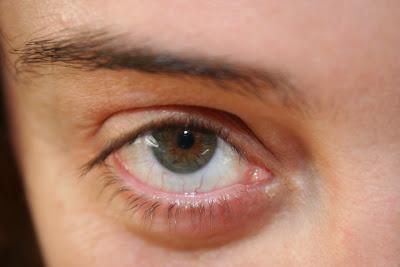
Extreme Close-Up (used to show fine detail of the subject or items that has some significance to the subject):


Establishing Shot (used to show the location, and not to make the audience feel bewildered as to the whereabouts of the characters):


These are the types of characters that would usually appear in a horror film:


The male protagonist (usually attractive, to garner likability from the audience): 


The female victim (also usually attractive, to garner likability from the audience. They are usually the victims due to how vulnerable and weak females are generally perceived to be):


The supernatural villain (usually supernatural as it is something that is unexpected, so therefore more likely to produce a reaction from the audience rather than the stereotypical ugly male villain):


These are the types of locations that would typically be featured in a horror film:

Old-fashioned houses:


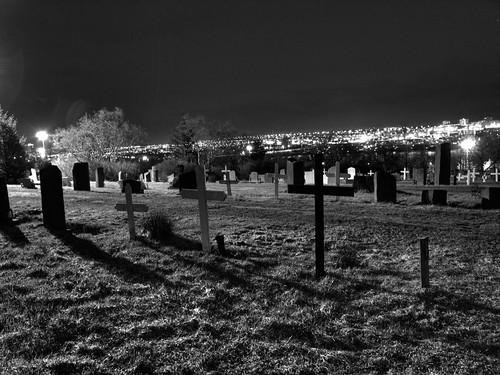
Graveyards:


Abandoned Warehouses:

Tuesday, 4 December 2012

Horror/Thriller 2 - The Strangers (Bertino, USA, 2008)

In this post, I will be explaining how cinematography, sound, mise-en-scene, editing, titles and questions prompted for the viewer to make an attempt in answering are all featured in the opening sequence of 'The Strangers'.


The images below were all featured in the dolly shots of various houses:


These images include the objects inside the house as well as the blood covered knife and blood soaked wall:


Horror/Thriller 1 - The Exorcism of Emily Rose (Derrickson, 2005, USA)

In this post, I will be explaining how cinematography, sound, mise-en-scene, editing, titles and questions prompted for the viewer to make an attempt in answering are all featured in the opening sequence of 'The Exorcism of Emily Rose'.


Watch from 0:00:00 - 0:05:13


- This is the title of the film 'The Exorcism of Emily Rose'


- This prompts the viewer to ask themselves why this man is holding a doll.


- This shows the fade from black to white.


- This shows the low-key lighting, as well as the abandoned house in an extreme long shot.

Friday, 30 November 2012

Titles

In this post, I will be explaining titles in detail, from what order the titles usually come in, what order the cast and crew come in, what titles usually appear and creative titles that have been used.

These are some of the titles that are featured in The Sixth Sense:


This is the order in which titles usually go in (this also features the titles that are usually implemented into the opening credits of most films):

- Companies who have produced and/or distributed the film
- The star actors/actresses of the film (star cast members)
- The film's title
- The rest of the actors/actresses of the film (cast members)
- Casting by
- Costume designer
- Edited by
- Sound by
- Music by
- Production Designer
- Director of Photography
- Executive Producer
- Screenplay by
- Producer
- Director

These are some of the titles that are featured in Ocean's Eleven:


Something to observe is that cast members (actors and actresses) are shown from the most significant cast member (the 'star') to the least significant cast member (one of the supporting actors/actresses). This is the opposite for the crew (the people working backstage), as crew members are shown from the least significant (usually the person casting actors and actresses for particular roles) to the most significant (the director).

These are some of the titles that are featured in The Girl with the Dragon Tattoo:


Unique titles to have been implemented into opening credits of films include Co-Producers and Sound Designers (seen in the opening credits of 'The Girl with the Dragon Tattoo) as well as Art Director, Assistant to the Producer, Makeup Supervisor, Assistant Director and Title Designer (all seen in the opening credits of 'Ocean's Eleven' *1960 version*).

These are the titles that are featured in I, Robot:


Tuesday, 27 November 2012

What are the conventions of an opening sequence?

There are many typical conventions of an opening sequence. From titles to soundtracks to establishing the mood/theme to establishing shots, I will be explaining below in detail what exactly are the conventions of an opening sequence.


- This video mentions about the questions that the audience should ask themselves whilst they watch the opening sequence of a film.


- This video mentions about titles and production/distribution companies and their logos, and why they are implemented into the opening credits.


- This video mentions how significant establishing shots are, and how helpful it is in giving the audience a good grasp on what to expect as the film/TV programme progresses from the opening sequence.


- This video mentions soundtracks (and how they assist in providing the mood and atmosphere of the opening sequence) and equilibriums (and how the audience can witness the normality of the film, and how characters would usually interact with each other before the disequilibrium takes place).

The Spiderwick Chronicles (Waters, 2008, USA)


In the Sliderocket presentation below, I will be explaining what happens in the opening sequence of 'The Spiderwick Chronicles', and how it specifically effects the audience.

Friday, 16 November 2012

Bridget Jones's Diary (Maguire, 2001, UK) - Romantic Comedy


The opening sequence for the film 'Bridget Jones's Diary' creates this image of a sympathetic and pitiful woman who is alone after the Christmas festivities are over, and this can be clearly explained in many ways.


Firstly, we see Bridget as one of the very small handful of 'younger' people in contrast to the number of elderly people who all are celebrating Christmas festivities. This already creates a feeling of sympathy towards Bridget, as she is surrounded by a large number of elderly people, who are believed by modern society to be nostalgic, dull, often forgetful and not the ideal company that someone of Bridget's age would be craving for.


Then, the focus of the camera shifts from the celebration of Christmas to panning outside Bridget's house on a cold winter night. This creates a more depressing atmosphere from the viewer, as the camera changes from filming a warm and festive celebration filled with people to panning outside a lonely woman's house in the freezing cold.


Through this transition, the narrator of the film (Bridget Jones, who is also the main heroine of the film) is clearly upset by being alone on such a festive and jolly occasion. Despite trying to implement some humor into her narration, Bridget still shows signs of sadness about her situation she would have to endure with at the time of the scene. "...I was going to live a life where my major relationship was with a bottle of wine, and I'd finally die fat and alone and be found three weeks later, half-eaten by Alsatians .." This quotation shows that whilst it is clearly exaggerated and something that Bridget would make light of, she (and also the viewer by the end of the scene) would acknowledge that unless something happened, Bridget would remain a single woman for the rest of her life, not getting to enjoy the wonders of a romantic relationship, thus garnering compassion from the audience as a result.


As the framing of the camera now displays Bridget's living room to the viewing audience, they can see Bridget alone on her sofa, watching an episode of 'Frasier'. Again, this is rather a depressing piece of visual imagery to conjure up, as she is sitting alone at such a festive time of year, watching a comedy programme which involves frequent uses of dry humour, in contrast to the blatant and obvious humour used in 'Bridget Jones's Diary'.


The editing also manages to rustle up a level of pity shown from the audience for Bridget, as the cross-dissolve in her living room shows the camera being positioned in one place, yet Bridget appears in more than one location in the living room, which shows that she is so bored with being alone that she is desperate to find something that will ease her mind from thinking about how unsuccessful she is at love.


Throughout this editing process, the song 'All by Myself', sung by Jamie O'Neal, can be heard by the viewer as they see Bridget eventually start to mime the words to the song. It starts off non-diegetic, as Bridget initially doesn't take any notice of the song. However, as the scene progresses, Bridget slowly but surely starts to mime along to the words that are being sung by O'Neal, giving the music elements of being diegetic as well as non-diegetic. While this scene may feature a level of humour that the viewer can find themselves easily laughing along with, it is also quite ironic since Bridget literally is all by herself, which is related to the title of the song.


Wallander (Firewall, 7th December 2008, BBC1)

Wallander titles.jpg

In the opening sequence of 'Firewall' in the Crime Drama TV Show 'Wallander', this show intrigues the audience by what transpires in the opening sequence.


At the very beginning of the episode, the screen remains pitch black for precisely ten seconds. Whilst some viewers may not take much (if any) notice of this, other viewers could use the black screen to make an observation about the darkness, evil and death that will likely be shown in 'Firewall' as these elements are all typical representations of the colour black. This affects the audience because a number of them will be interested to see whether or not darkness, evil and death appear in this episode of 'Wallander' and if so, how they are implemented into the episode.

Then, after we emerge from the entire blackness of the screen, the viewer then witnesses an extreme long-shot of a rural area which features (from what we as a viewer can see) a small handful of people in that area. This suggests that the area might connote a sense of isolation and abandonment which could be something for the viewer to take note of in case something might transpire in that location at some point during the episode. As the rural area seems to be deserted, it creates a sense of vulnerability for the very few number of characters who do appear in such an isolated location, and as a result, makes the audience feel sympathetic towards them and worry for what their fate may be. However, the empty rural area could also suggest peace, quietness and serenity, painting it in a far more positive lighting and if this proves to be what the director is aiming for, attempting to make the viewer not suspect any possible signs of death, darkness and/or evil in such a quiet and peaceful area.


Once the establishing shot of the rural area has finished transpiring, the camera now focuses on the backs of two women in black clothing. The scene becomes more tense, and the sound helps to create this moment of tenseness. Aside from the diegetic sounds of footsteps and wind (although that could be debated whether or not it is actually diegetic, as the wind sounds does seem to be exaggerated dramatically in post-production), nothing else is audible in the scene. This is an indication that the director wants the focus to be on nothing but the two female characters that are shown in the scene, which could further hint that they have important roles in this episode if the director is attempting to place all of the audience's focus onto those two female characters.


An observation that the viewer could make about the two female characters from first glimpse is the colour of the upper-half of their black clothing. As mentioned earlier, black connotes a sense of darkness, death and evil. These three representations could apply perfectly to both females later on in the episode, but as the viewers will have only seen their backs, they can only make perceptions about what these females are like. This should interest the viewers enough to make them feel tempted to watch more, to see whether their assumptions on these two female characters are correct or incorrect.


Then, the camera shifts focus from the females to using extreme close-ups to show the taxi driver's possessions inside the taxi that have been covered up with blood. Extreme close-ups are used to show these possessions in great detail, allowing the viewer to create more of a realistic personality for the assaulted taxi driver and make an assumption of him based from what they can see of his possessions.

Some of the possessions that are shown inside the taxi point towards the driver being a family orientated man, as one of the photos show him providing physical contact with a younger man, most likely a relative of his. If the younger man is indeed a family member of the taxi driver, then the audience will feel immense heaps of sympathy towards not only the taxi driver, but for the younger male as well as the rest of the driver's relatives as modern society despise the idea of family bonds being broken up for whatever reason, so to see a family-orientated man die will upset the viewer substantially, as they will instantly realise that his bonds with other family members will forever be broken.


After this, the camera cuts away from inside the taxi to the two walking females, then back to the taxi, then back to the two walking females and so on. This method is used to essentially indicate to the viewer that the females and the dying male will eventually intertwine together to produce a plot for the episode. The audience  will be affected by this method as they will gain a better understanding of what will transpire in the episode, partially helping them to predict the outcome of the 'Firewall' episode. This scene continues for a while, until an extreme close-up is once again used to display one of the females dropping a blood coated knife, which is telling the viewer that she has done something very immoral and probably committed a murder. This shocks the viewer, as they were in the midst of these frequent cuts between the females and dying male until suddenly they witness one of the females dropping a blood covered knife, as well as a bombshell in the process.